
FC Barcelona So Far This Season: A Campaign of Extremes, Lessons and Collective Growth
By Ashutosh Welankar
A Season Defined by Contrast
FC Barcelona’s 2025/26 season so far has unfolded at two very different ends of the spectrum. Performances have alternated between dominance and collapse, making it a campaign full of drama and uncertainty. For neutral fans, it has been entertaining; for Barcelona supporters, emotionally exhausting. While last season’s highs under Hansi Flick still shape expectations, this campaign has followed a different rhythm. A deeper look reveals a side that has evolved sometimes positively, sometimes painfully, with one recurring theme standing out: Barcelona’s fortunes have closely followed the presence, or absence, of key figures such as Raphinha and Joan García.
Oviedo: The Night That Changed the Season
That optimism collapsed abruptly in Oviedo. In the 66th minute, Raphinha was forced off after pulling up, initially dismissed as a routine muscle issue. By the following morning, the reality was far harsher. Raphinha had suffered a right hamstring injury, while Joan García sustained a medial meniscus tear in his left knee and required arthroscopic surgery. Losing a key attacking outlet and the first-choice goalkeeper in the same game proved devastating and marked the beginning of Barcelona’s most turbulent phase of the season.
October’s Collapse and Loss of Balance
October quickly became the darkest month of Flick’s tenure. A painful Champions League defeat to PSG at home was followed by a humiliating 4–1 loss in Seville. Defensive organisation collapsed, urgency faded, and confidence drained. The low point came against Real Madrid, where Barcelona was beaten after having dominated recent Clásicos. Without Raphinha, the team continued to score but lacked consistency and intensity. His relentless work rate, pressing, and movement were sorely missed. At the other end, García’s absence, combined with Iñigo Martínez’s earlier departure, left the defence exposed, and goals were conceded far too easily.
November Struggles and the Turning Point
The instability spilled into November, particularly in Europe. A frustrating draw against Club Brugge and a humbling defeat at Stamford Bridge underlined the lack of balance. Yet that Chelsea match also marked a turning point. Both Raphinha and Joan García returned to the lineup after regaining full fitness, and from that moment, Barcelona’s season began to shift.
December to January: Control, Consistency and Silverware
From early December to 1 February 2026, Barcelona played sixteen matches and lost only once against Real Sociedad in a game Raphinha again missed due to a knock. With him back in the side, Barcelona went on an eleven-game winning streak across all competitions. That run included a commanding Spanish Super Cup victory over Real Madrid, a result that ultimately cost the Madrid manager his job. Momentum carried into Europe as well, with Barcelona finishing inside the top eight of the Champions League group stage, sealing qualification with a dominant 4–1 away win in Denmark. By the end of January, Barcelona had already lifted the Super Cup, progressed in the Copa del Rey, and climbed to the top of La Liga with 55 points from 22 games.
What’s Gone Right for Barcelona
Joan García: Stability at the Back
One of the most significant positives of the season has been the impact of Joan García. His arrival has transformed Barcelona’s defensive outlook. Calm, authoritative, and composed under pressure, García has brought much-needed stability. In 16 La Liga matches, he has kept eight clean sheets, maintaining a remarkable 50% success rate. He has faced 53 shots on target and conceded just 12 goals in the league. In the Champions League, he started 5 matches, dealing with 20 shots on target while conceding 8 goals. Across both competitions, his total of 53 saves underlines his reliability in high-pressure situations.
Marcus Rashford: Opportunity Taken
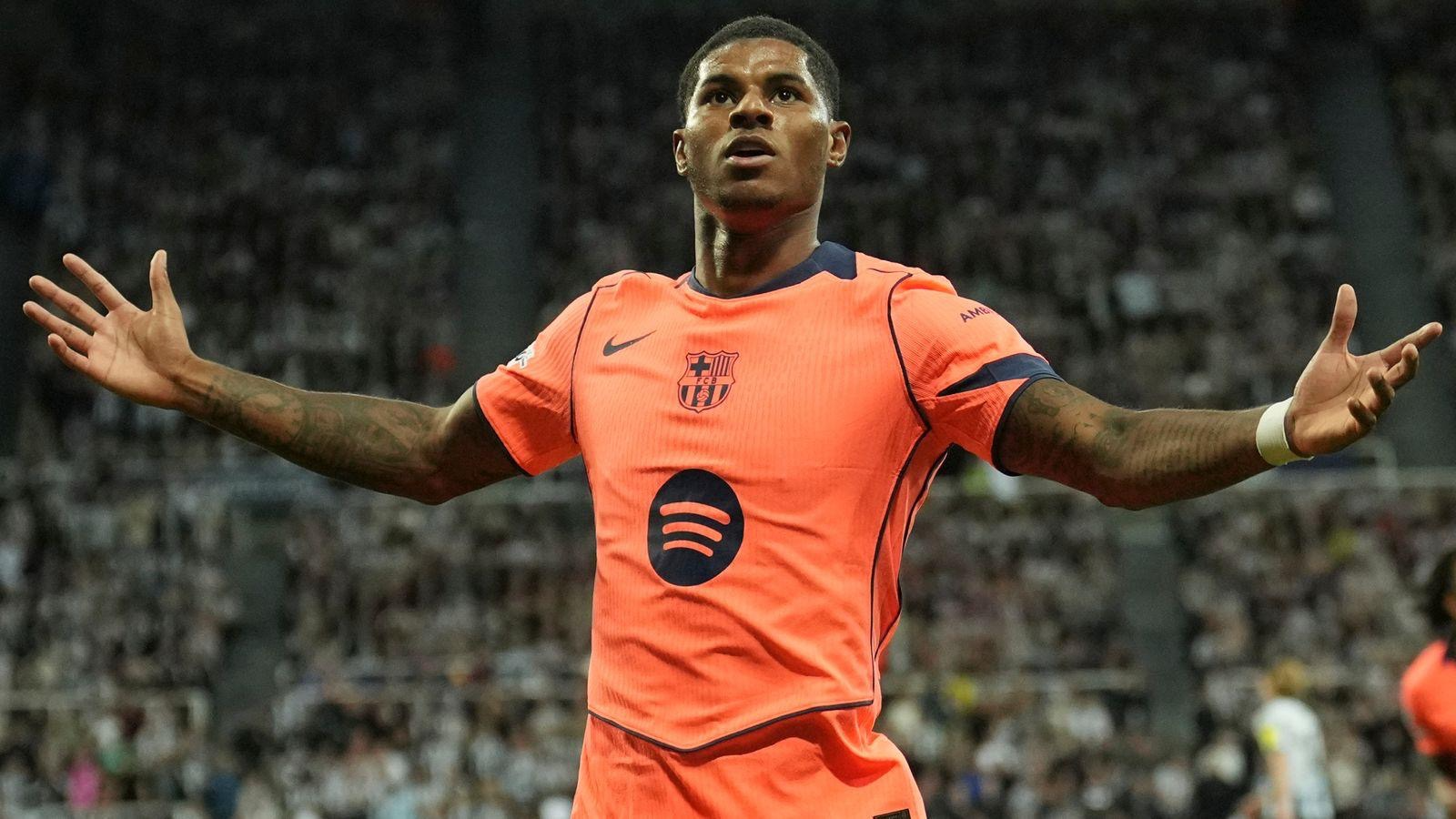
Another encouraging storyline has been the resurgence of Marcus Rashford. Signed on a season-long loan as a depth option, injuries to both Yamal and Raphinha handed him extended responsibility. Rashford responded decisively, registering 19 G/A with 10 goals and 9 assists across competitions. His pace, experience, and maturity provided balance and continuity during a demanding period.
Collective Responsibility Over Individual Dependence
Perhaps the most important positive has been Barcelona’s clear shift toward collective responsibility. Rather than relying on one standout individual, contributions have been spread throughout the squad, creating balance and resilience. Lamine Yamal leads the way with 25 goal involvements (13 goals, 12 assists), but the real significance lies in the support around him. Ferran Torres (16 G/A—15 goals, 1 assist) and Robert Lewandowski (12 G/A—11 goals, 1 assist) have offered consistency in front of goal, while Raphinha has combined creativity with end product through 13 G/A (9 goals, 4 assists). Fermín López has quietly emerged as one of the side’s most influential all-round performers with 17 G/A (9 goals, 8 assists), and Dani Olmo’s impact has further strengthened the team’s balance, contributing 11 G/A (7 goals, 4 assists). Alongside Marcus Rashford’s contributions, these figures highlight an important statistical trend: Barcelona’s attacking output is distributed across the squad rather than concentrated in a single player. This spread of goals and assists has made the team more unpredictable and better equipped to manage injuries, rotation, and tactical adjustments, pointing toward a more sustainable attacking structure.
Off the Pitch: Smart and Measured Decision
João Cancelo’s Return and Tactical Flexibility
Barcelona’s January decision-making reflected growing maturity. The loan arrival of João Cancelo added immediate value. Familiar with the club and tactically versatile, Cancelo has provided depth across both flanks and allowed Flick to explore internal solutions by allowing and integrating Gerard Martin to play as a left-footed centre back to provide balance, particularly following Iñigo Martínez’s departure. Cancelo’s presence has strengthened both defensive coverage and attacking flexibility.
The DRO Fernández Sale and Long-Term Planning
The departure of DRO Fernández to PSG could have destabilized the squad, but Barcelona handled the situation pragmatically. The club negotiated a fee of around €8.5 million and reinvested it into four young players—Juwensley Onstein, Hamza Abdelkarim, Patricio Pacifico and Ajay Tavares. All four have been integrated into Barça Atlètic, allowing them to adapt to the club’s playing style, tactical demands, and culture before first-team exposure. This patient approach contrasts sharply with past missteps, most notably the case of Vitor Roque, whose immediate promotion to the first team hindered his adaptation and led to a premature sale.
Conclusion: Signs of a More Mature Barcelona
Barcelona’s season so far has been uneven, emotionally demanding, and, at times, chaotic. Yet beneath the turbulence lies a clearer sense of direction. The emphasis on collective output, smarter squad management, and patient player development suggests a club learning from past mistakes. As the decisive phase of the campaign approaches, Barcelona appears better prepared structurally and mentally to sustain a genuine challenge on all fronts. This may not yet be a finished product, but it is unmistakably a more mature Barcelona in the making.
