Dance Of Democracy at Camp Nou: Inside FC Barcelona’s 2026 Presidential Election Battle
By Ashutosh Welankar
In modern football, where state ownership, billionaires, and private equity funds increasingly shape the destiny of clubs, one institution continues to stand apart: FC Barcelona. Built on the principle of member ownership, the club’s future is not decided in boardrooms of investors but in the hands of its members, “The Socios.”
Every election in Barcelona is not just about choosing a president; it is a referendum on identity, philosophy, and the direction of one of football’s most culturally significant institutions. As March approaches, the city feels the familiar buzz of banners on balconies, debates in cafés, and campaign messages echoing through the streets. The question is simple yet profound: what should Barcelona be in the next chapter of its history?
With the club navigating financial recovery, stadium transformation, and sporting ambitions, the upcoming vote carries weight far beyond Catalonia. It is democracy in football, alive and visible.
It’s election time on the streets of Catalonia’s capital.
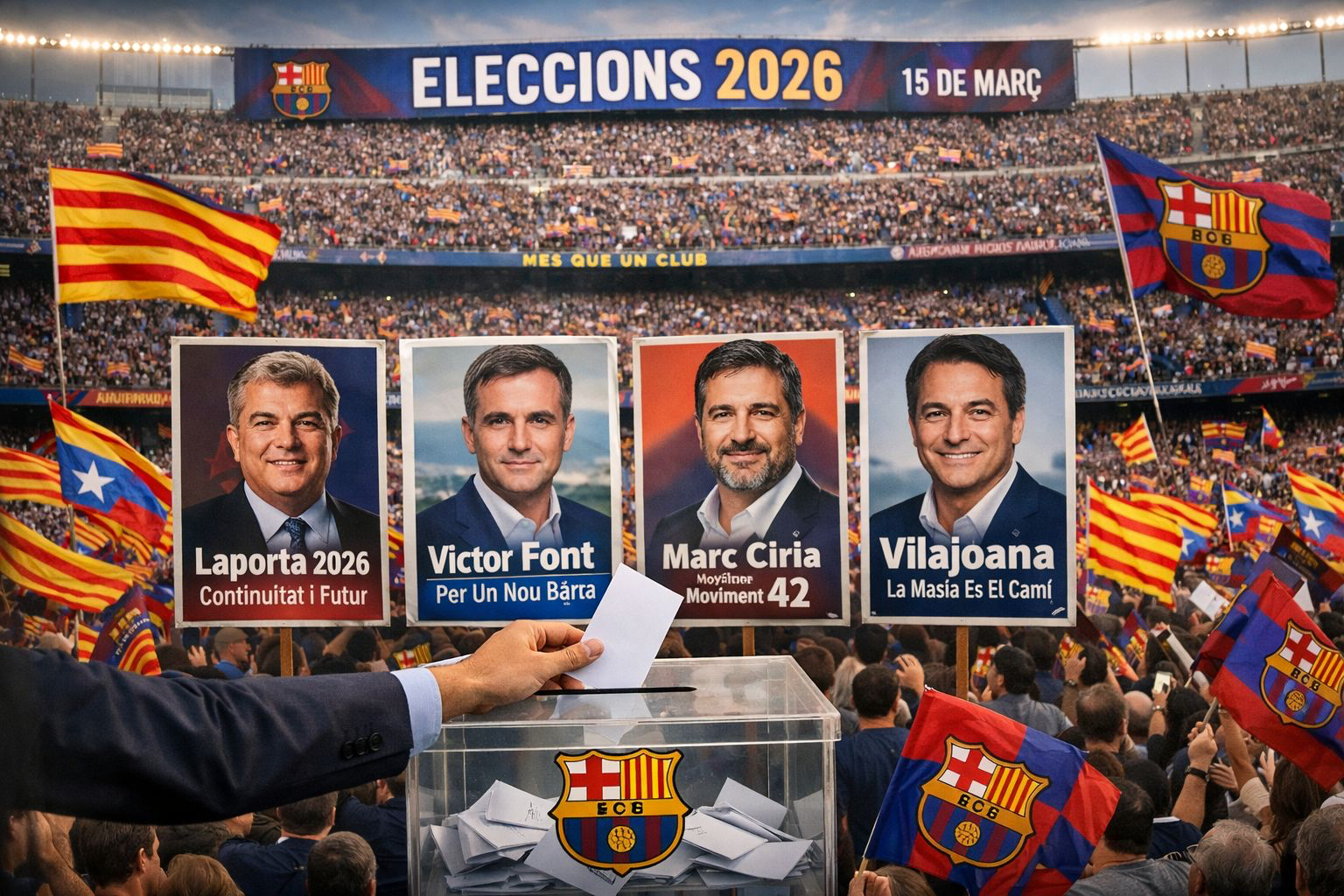
As European football shifts toward private ownership, Barcelona remains the last major member-owned club. With this in the foreground, FC Barcelona and its members, called Socios, will decide on their vision for the next five years over the next two months.
15th March is the date slated for democracy in football to once again take centre stage. Until then, we see streets of Barcelona flooded with campaign banners and much more by candidates in order to gather support.
Barcelona is governed by the Statutes del FC Barcelona (statutes of FC Barcelona)
Now required by the club's rule book, elections must be held every five years, and the mandate of current president Joan Laporta is set to expire in March 2026.
Thus, on 9th February 2026, Joan Laporta called for elections and resigned as the president of the club. Along with him, the majority of his board members also resigned, but in order to make sure the club doesn’t fall into chaos then vice president, Rafa Yuste, remained and has taken over as interim head of the club till the end of June 2026. Now, before we go into candidates in contention, let’s take a quick look at the job role they are contesting for.
What Does the President of Barcelona Actually Do?
The duties of the FC Barcelona president are wide-ranging. He is responsible for all sporting as well as commercial matters of all divisions of the club, be it football or basketball, and so on...
He runs the day-to-day operations of the club while also being the face of the club at the international level, be it at FIFA, UEFA, etc. He also looks after the appointments of executives and verticals in charge, like the sporting director and the La Masia Head (academy head).
How does the election process work, and now what’s the procedure for it?
FC Barcelona presidential elections are set to take place on 15th March 2026. Every candidate who desires to stand for election for the post of president must go about gathering signatures from Socios. Each candidate, in order to qualify as a valid candidate for the presidential post, must show a minimum of 2000-2500 socios' signatures in their support, which means 3% of the total club membership signatures.
Then, candidates must present a bank guarantee equal to 15% of the club’s total budget. This one unique FC Barcelona clause is established to ensure financial sustainability and responsibility. In the current timeline, the deadline for presenting the signs and guarantees is slated for 2nd March 2026.
All members (socios) above 18 or 18 with at least a minimum 1-year membership can vote on Election Day in person at polling stations. Then the candidate with a simple majority wins. In the last election, Joan Laporta had secured 54% of the votes, while Victor Font was at 30%. Thus, Laporta was elected as president in 2021.
The Faces of the 2026 Race
Note: all these are pre-candidates, as the deadline to submit the above-mentioned signatures and bank guarantee is 2nd March 2026 by 9 pm in order to be officially declared as a candidate by the club owing to procedural requirements.
1. Joan Laporta: The Continuity Candidate
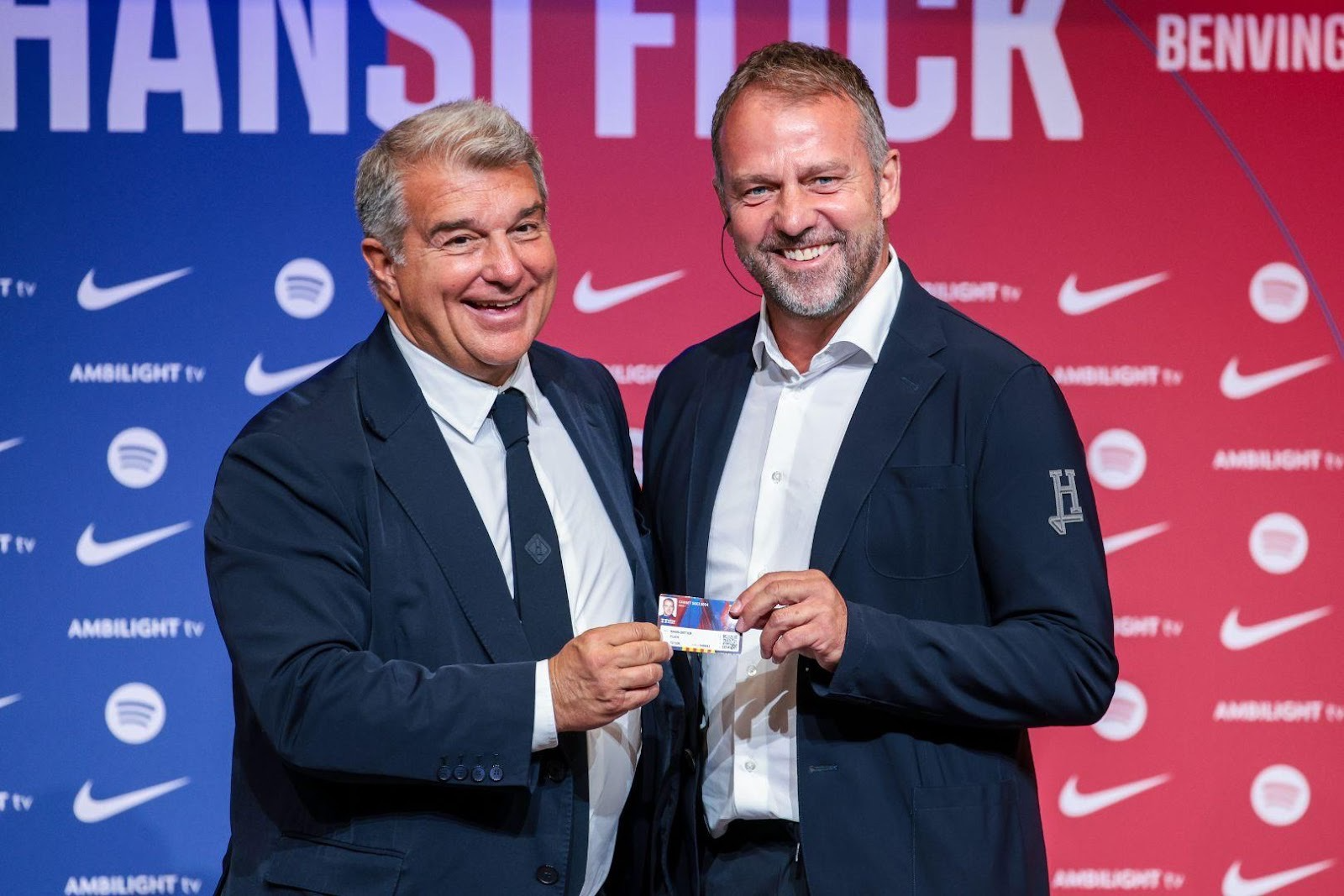
Of course, Joan Laporta, the incumbent president, would want his historic third term. He took over the club at times when the club was in dire chaos owing to Bartomeu and mismanagement. He had the task of stabilizing the club when its finances were at an all-time low, and owing to COVID, it felt almost like an emergency when he took over.
Under his stewardship, Barcelona sailed through its most difficult phases, where it was and is yet financially crippled. Laporta’s biggest achievement will be the 2022 transfer window, when the club managed to pull three key signings: Lewandowski, Raphinha, and Jules Kounde. But his darkest cloud on the presidential ship will be the president who let go of Barcelona’s poster boy for decades, Lionel Messi. Laporta defends his decision, saying he chose the club over Messi.
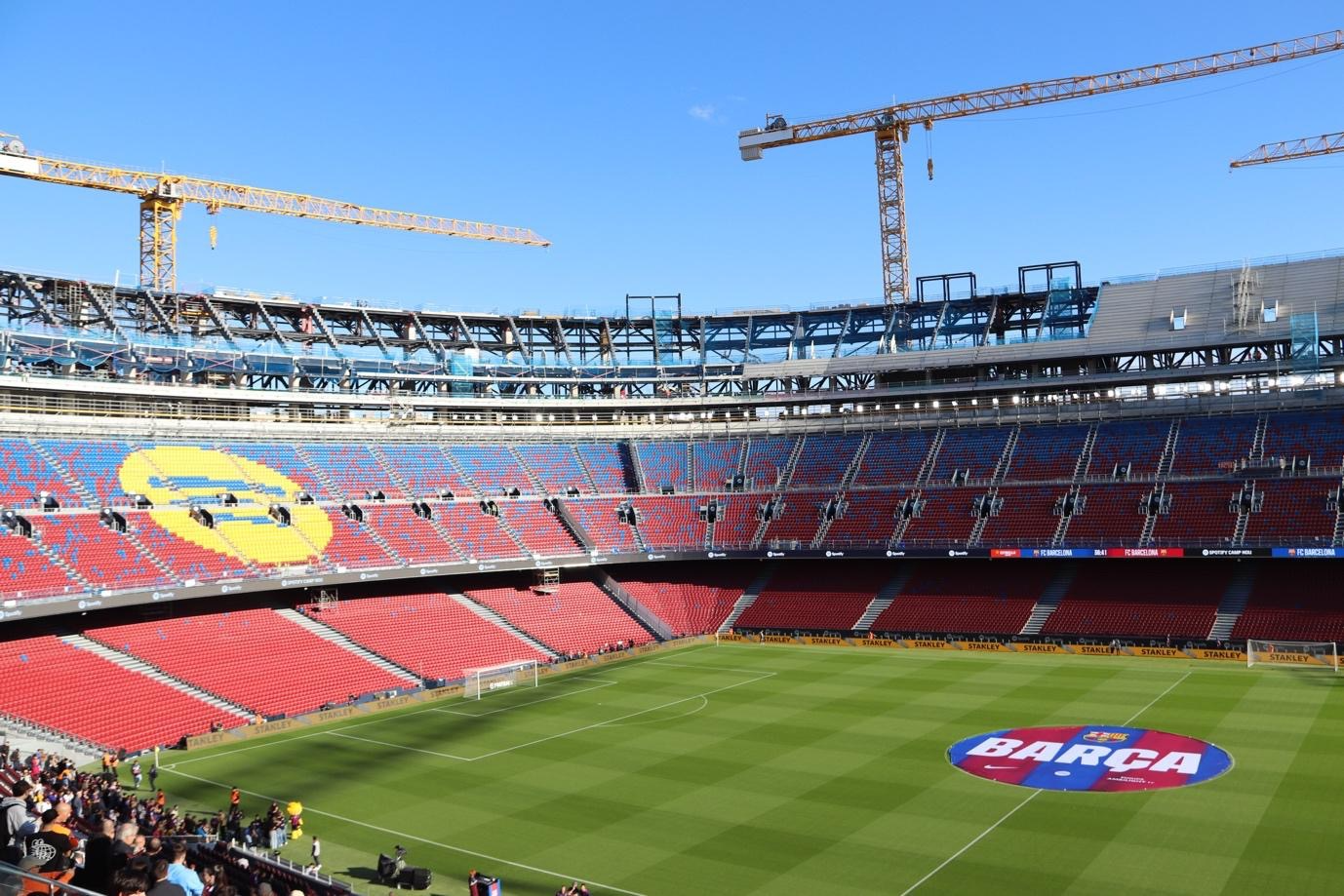
Another decision that might work in his favor will be his openly declining to accept the controversial La Liga CVC deal. Laporta’s golden boy project is Espai Barca, where the renovation of Camp Nou was kicked off and is in its final phase. But this project stayed at a cost of around 1.5 billion, which to a financially dire club can sound like make-or-break money.
From an economic standpoint, two deals that work in his favor will be Barcelona’s partnership with Spotify, which has given them good returns, plus fans have been surprised with many famous music artists collaborating with Barca and them releasing special edition jerseys as they did with Travis Scott last season for El Clásico. The second most important deal, which is often called the mother of all deals ever signed by the club, is with Nike as the apparel brand. The deal is reported to be worth over 1.7 billion over a huge time span of 15 years, meaning 100 million per year.
But the downside of these deals, which can go against him, is that in spite of these deals, Barcelona has seen struggling financially. A recent example will be that while other clubs signed players like Lookman, all Barca could manage was Joao Cancelo on loan. Espi Barca is getting delayed, which by now everyone knows. First, it was said that the project would be ready by August 2025, but then Barcelona had to start the season playing at Cruyff Arena, then at Monjuïc, (meaning they had to pay rent to Monjuïc and to the Barcelona city council), even though Camp Nou is open but not fully open in 2026.
Another negative point of Laporta will be his economic levers, which he activated, which in the short term turned out to be a game changer, but his opponents say he gambled with the club's future earnings by doing so. Yet according to the Barcelona treasurer in Jan 2026, the club has liabilities of 2.5bn and is yet to return to the 1:1 rule on La Liga financial books. Laporta proposed hosting the UCL finals in 2029 in the brand-new Camp Nou as a crown jewel moment for the newly upgraded stadium. He is betting on continuity, stability, and trusting the current direction of the club.
2. Victor Font: The Long-Term Visionary
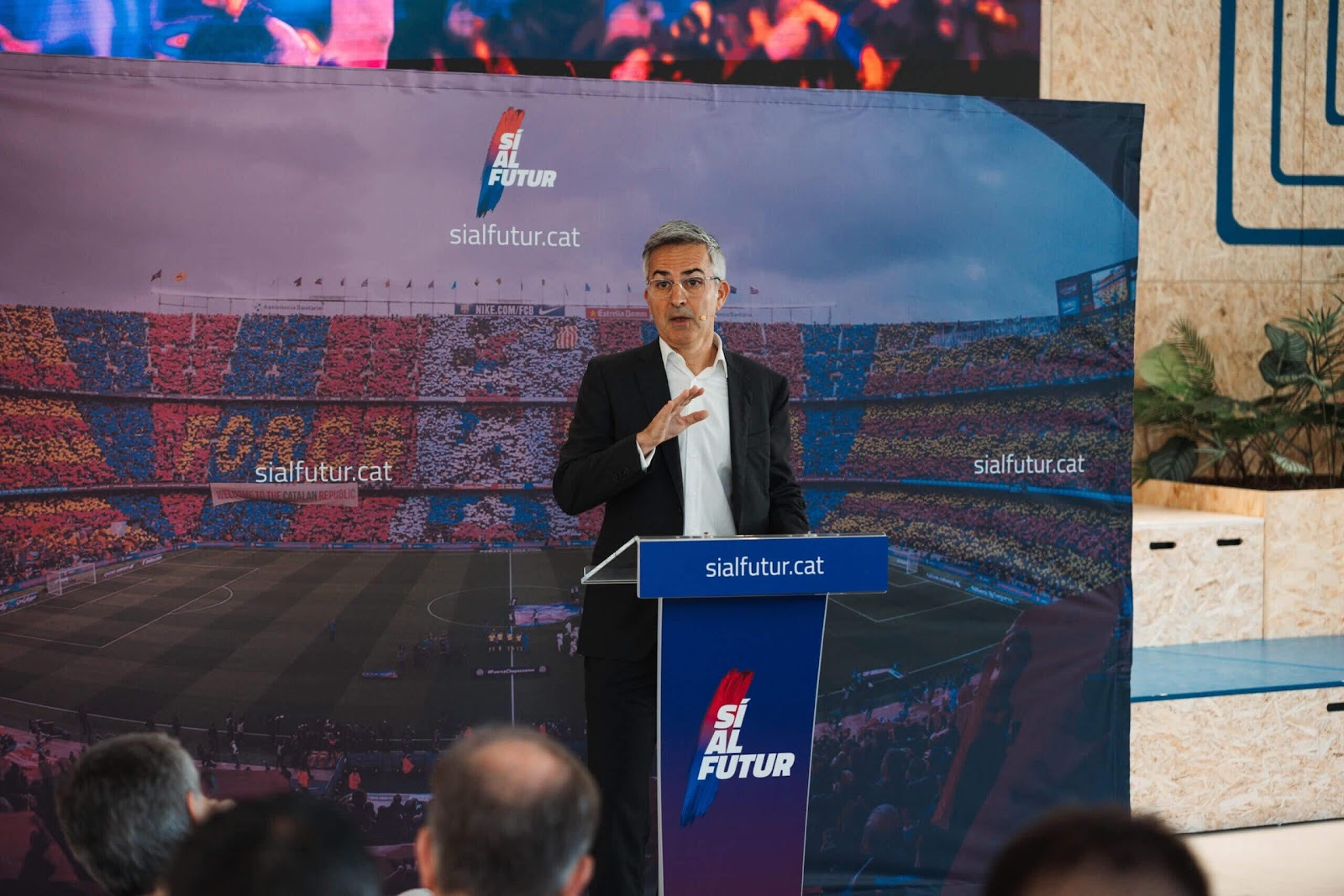
Victor Font, a 53-year-old, is considered a serious challenger to Joan Laporta. In 2021, he lost to Laporta and came second with 30% of the votes. Font is the co-founder of Delta Partners, a financial tech consulting firm, but is also deeply connected to Catalan football culture. He is part owner of Catalan Publication Ara, a publication house in Catalonia that runs a daily newspaper in Barcelona.
Font also owns a football analytics company named Kognia Sports Intelligence.
This sports tech start-up builds AI-powered football analytics software.
Victor Font’s main point is that he was never in favor of Laporta's use of levers, as, according to him, for short-term financial gains, it’s wrong to compromise the club’s future earnings. Another point of the Font Campaign, he said, is that he aims to create a socio (member) favoured ticket package that favors non-socio club members (season ticket holders). Font has also included an emotional angle in his pitch that if he wins the election, the first thing he will do is call Lionel Messi to gain back his trust and goodwill, and he would like the Barcelona poster boy back at Camp Nou.
In a recent interview with Mundo Deportivo, Font openly said,
"If he wins and comes to power, then Hansi Flick will remain as head coach, but Deco won’t remain the sporting director."
Which indicates that Font is happy to continue with Flick but demands more structure around it to optimize Flick and to fully back him. He then continued saying,
“Flick demands stability," and he continued saying by that he means professional stability, meaning Hansi doesn’t want Inigo Martinez to leave before just one week before the start of the new season.”
Font has heavily criticised Laporta’s easy way out of either levers or looking for easy money options, targeting the Congo deal, which Barcelona signed with the government of Congo. Font wants to emphasize unlocking the potential of Barca. Font is betting on long-term vision and stability, which is clearly evident, as in one of the interviews, he said,
“I have a dream, which is that Barca continues to belong to its people. This is a tough road, but I am going forward with a long-term vision.”
3. Marc Ciria: The Messi Restorationist
He is a sports economist and financier. He recently officially launched his bid for the presidency. He launched his campaign under the banner name of “Movement 42." So in the list, he is the frontrunner as of now who has officially launched his candidacy with an actual project.
His campaign is twofold; one part of the campaign is based on real solutions to Barca’s financial problems. His second half is based on emotional appeal, connecting Barca fans with Messi’s departure, but he reframed his campaign to get the Argentina international back at Camp Nou as the USP of his campaign.
His campaign, Movement 42, is also named as this is the 42nd presidential election in Barcelona. He took a jibe at the existing board by saying,
“When you realize things aren’t working, you have to change them, and you have to start over."
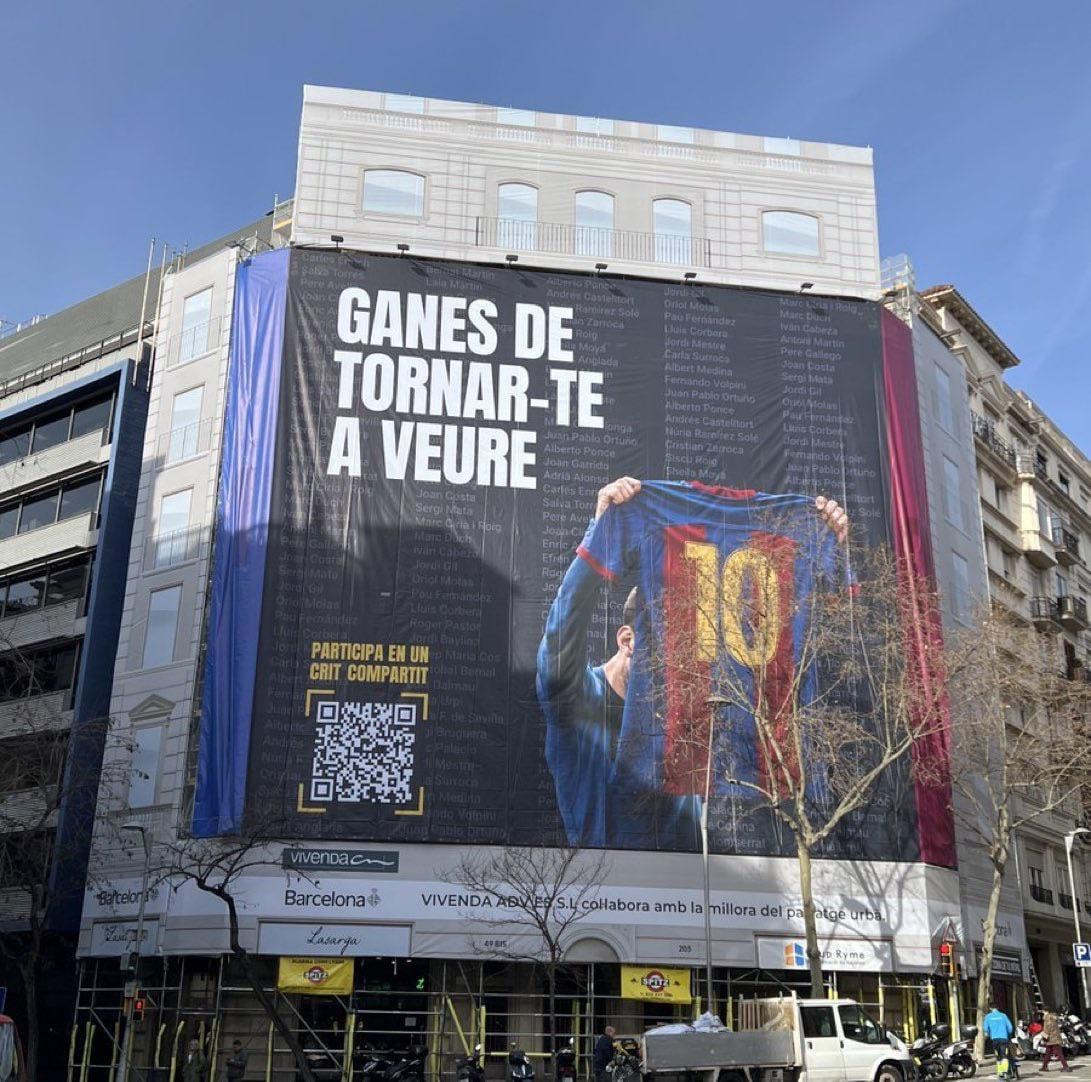
Ciria believes Lionel Messi’s return to Barcelona isn’t just emotional but essential for economic regeneration of the club. He put a massive banner right in the heart of the city, with it featuring Messi in his iconic celebration, which he did after scoring a stoppage-time winner against their arch-rivals, Real Madrid, at their home ground, Santiago Bernabeu.
The banner, along with that iconic photo of Messi, displays a phrase.
“Ganes de Tornar-te a Veure” meaning “can’t wait to see you again”.
He presents himself as the candidate capable of healing the already fractured relationship between Messi and the club he called his home for over two decades. Recalling the incident of Messi’s visit to Camp Nou secretly at night, Ciria commented,
“We want our legends to be able to come back to the club and not have to do it in the middle of the night and hidden."
According to him, Messi's Barcelona relationship must be like the Michael Jordan-Nike relationship. Ciria’s whole philosophy is that Messi is much more than a player; he is a commercial asset, leveraging him as an asset to earn revenue for the club. Ciria believes the best sportsman on the planet should be Barca's biggest brand ambassador.
4. Xavier Vilajoana: The La Masia Traditionalist
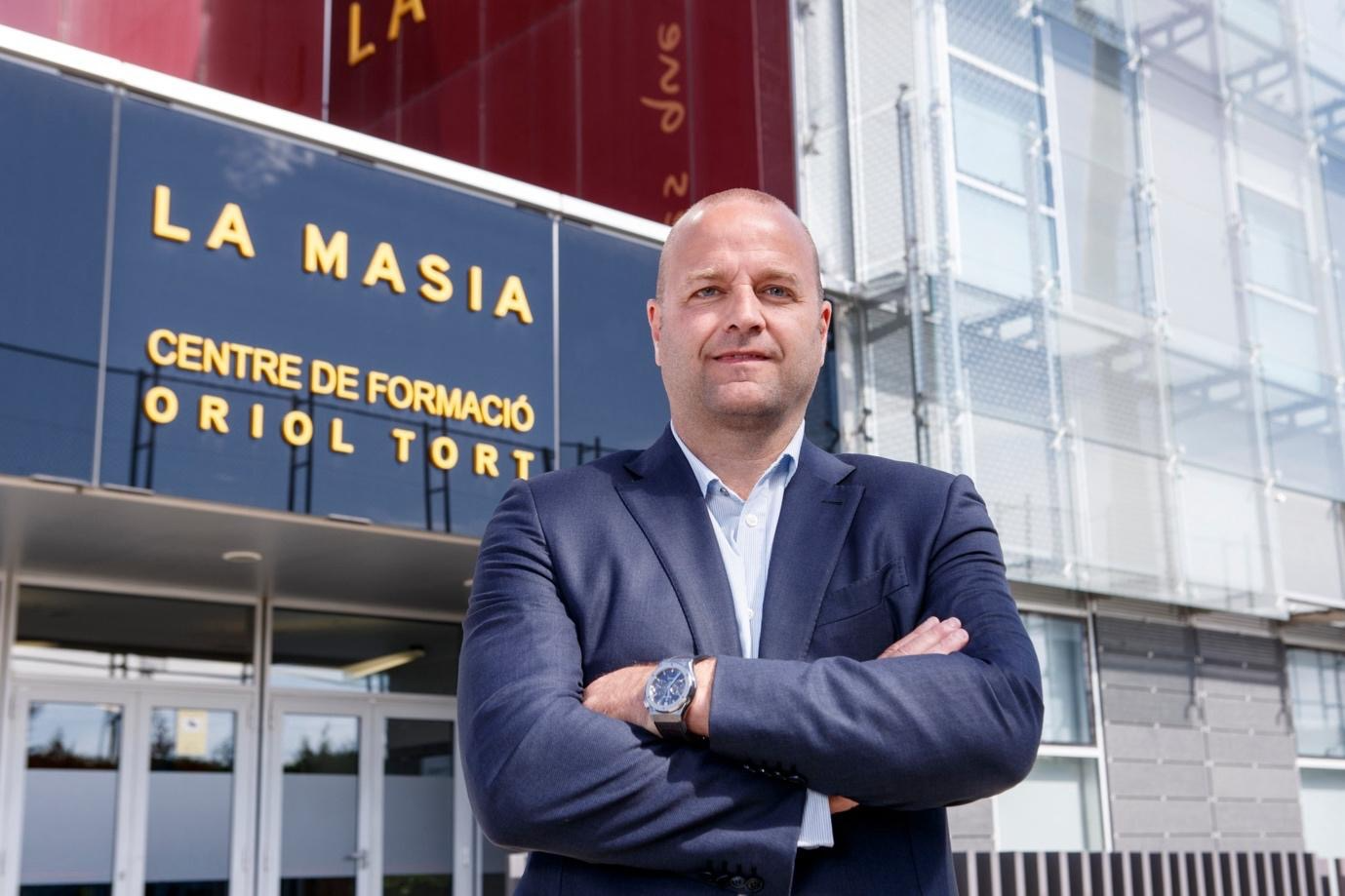
He is a 53-year-old businessman and CEO of Euroconstruc, a development company specialized in residential homes. He is a former Barcelona player and played at clubs, on youth teams, and on futsal teams. He was then involved in club affairs in some capacity, be it as a committee member or board executive, etc. He is often termed a club institutionalist, someone who knows the culture and grew up inside it.
He was the board member from 2015 to 2020 under then-president Bartomeu. He was then put in charge of La Masia and youth teams. Thus, he claims he has the knowledge of know-how about football structure and its governance.
His entire campaign is based on returning Barcelona to the La Masia identity.
According to him, the club needs to focus on academy investment.
His tagline for the campaign is
“We at Barcelona don’t need superstars. Our next superstar is already at La Masia”.
He has launched “Veus Del Barca," an active listening tour with the aim to listen and learn first-hand about members’ concerns, frustrations, and what they hope and expect for the future of their Blaugrana club.
According to him, for far too long, decisions had been taken behind closed doors, but no longer can members be mere spectators; they are the soul of Barca, and they need to be heard and listened to.
A Vote That Will Shape Barcelona’s Next Era
As the campaign intensifies and Socios prepare to cast their votes, this election represents more than a change of leadership; it is a choice between different visions of what Barcelona should become. Continuity versus reset, financial pragmatism versus emotional reconnection, and global commercial ambition versus a return to institutional roots each candidate embodies a different path. “Four candidates, four visions, and a club deciding what it wants to be.”
For a club that prides itself on the motto “Més que un club," the decision carries symbolic weight. The outcome will influence not only boardroom strategy but also how Barcelona navigates the modern football landscape while staying true to its member-owned identity.
Thus, in March 2026, democracy will once again speak at Camp Nou, and with it, the direction of one of football’s most storied institutions will be decided by its people.
