
25/26 SHAME: THE COLLAPSE OF MILAN, A CLUB THAT LOST ITSELF WHEN IT MATTERED MOST
By Giuseppe Forlano
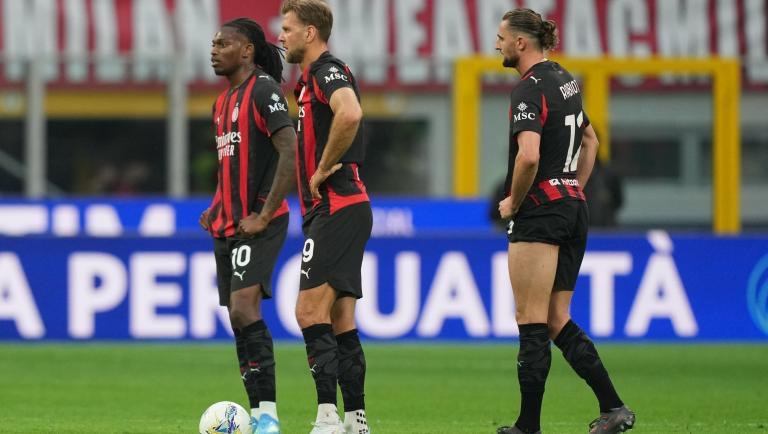
There are seasons that end with disappointment, others that conclude with regret, and then there are seasons like Milan’s, campaigns so painfully self-destructive that they force an entire fanbase to sit in silence and ask one uncomfortable question: how did a club of this magnitude manage to throw everything away when everything was still in its hands?
Because let us be brutally honest from the very beginning: Milan’s exclusion from next season’s Champions League did not happen against Cagliari. The defeat against the Sardinian side was simply the final chapter of a collapse that had been unfolding for weeks, hidden behind fragile performances, alarming tactical confusion, and an increasingly worrying absence of identity.
The warning signs had been impossible to ignore.
It started in Naples, where Milan suffered a narrow 1-0 defeat against Napoli. Losing away against a top side is never, in itself, catastrophic; however, what deeply concerned supporters was not merely the result but the performance itself. Milan once again looked incapable of reacting, incapable of changing the tempo of the game, and most importantly incapable of displaying the urgency required from a side supposedly fighting for Champions League qualification.
If the defeat in Naples raised concerns, what followed at San Siro against Udinese felt humiliating.
A shocking 0-3 home defeat, delivered in front of supporters who expected pride and reaction, instead revealed one of the most lifeless Milan performances of the season. No aggression in midfield, no attacking ideas, no tactical fluidity. The team looked disconnected, emotionally fragile, and incapable of responding to adversity, as though the pressure of the final stretch had already become too heavy to carry.
Then came Verona. Yes, Milan won 1-0 away from home, but even victory failed to convince. There was no authority, no confidence, and certainly no football identity behind the result. Instead of looking like a team marching toward a Champions League finish, Milan looked like a side desperately surviving week after week, escaping criticism through narrow margins rather than convincing performances.
And then, inevitably, came Juventus. The 0-0 draw at San Siro felt less like a football match and more like ninety minutes of confusion. A game completely deprived of ambition, imagination, and courage, where Milan once again failed to impose themselves at home during one of the most decisive periods of the season. Watching the Rossoneri had become increasingly frustrating because supporters no longer recognized what exactly this team was trying to be.
Were they defensive? Were they reactive? Were they building something? Or were they simply improvising?
The answer became painfully obvious against Sassuolo.
The 2-0 defeat away from home, compounded by Fikayo Tomori’s naïve red card within the opening thirty minutes, perfectly summarized the emotional instability of this squad. Great teams suffer under pressure and find solutions. Milan collapsed under pressure and looked completely lost. Tomori’s dismissal was not merely an individual mistake, it symbolized a broader issue: a team mentally fragile and tactically unprepared when facing adversity.
As frustration continued to grow, Milan welcomed Atalanta to San Siro hoping to regain control of their destiny. Instead, they suffered another humiliation.
A painful 3-2 defeat at home, in which defensive mistakes, poor organization, and alarming vulnerability once again emerged at the worst possible time. By this stage, excuses had begun to run out. The problems were no longer temporary setbacks, they had become structural weaknesses. Milan looked unable to defend leads, incapable of controlling matches, and increasingly disconnected from the intensity required at the highest level.
The dramatic 2-1 victory away against Genoa, secured in extremis, briefly restored hope. Perhaps, supporters thought, this team still possessed enough character to fight until the end. Perhaps the final push would arrive exactly when needed.
Football, however, has a cruel way of exposing illusion.
Because the final act of Milan’s season, the devastating 2-1 defeat against Cagliari at San Siro, was not simply disappointing. It was humiliating.
And perhaps what made it even more unforgivable was the way it began.
Second minute. Alexis Saelemaekers scores. Milan lead 1-0.
San Siro erupts. Seventy-five thousand supporters believe again. One final push, one final performance, one final victory to secure a place among Europe’s elite after spending 37 matchdays inside the top four.
Yet what happened next defied explanation. Instead of attacking, Milan retreated. Instead of controlling the match, Milan defended.
Instead of behaving like a team fighting for its Champions League future, Milan looked strangely comfortable protecting a one-goal lead after only two minutes of football.
And here lies perhaps the greatest accusation of all.
This team looked afraid to win.
No pressing. No aggression. No intensity. No hunger.
No willingness to dominate a Cagliari side with absolutely nothing left to fight for.
Dear Milan, what exactly was the plan?
To defend for almost ninety minutes at San Siro while your entire season stood on the line?
Because eventually fear became punishment. Cagliari equalized. Milan collapsed emotionally. And once again, when courage was needed most, this team disappeared.
Supporters can forgive mistakes.Supporters can forgive defeats. But what supporters rarely forgive is indifference. And too often, this Milan side looked indifferent.
Indifferent while wasting opportunities. Indifferent while surrendering points. Indifferent while seventy-five thousand supporters continued filling San Siro believing they were pushing their club toward Champions League football.
How exactly does a team spend 37 league matchdays inside the top four, only to throw everything away at home on the final evening against Cagliari?
The truth is painful but unavoidable: this collapse was earned.
And Gerry Cardinale clearly understood the magnitude of the disaster.
Because only days after the season’s conclusion, Milan’s owner responded with a footballing earthquake. CEO Giorgio Furlani was dismissed. Sporting director Igli Tare was removed. Head coach Massimiliano Allegri was fired. Geoffrey Moncada, responsible for scouting coordination, also left the club. A complete institutional reset.
A brutal acknowledgment that failure of this magnitude could not simply pass without consequences.
Yet amid the ruins, one figure remained standing.
Zlatan Ibrahimović.
And while nobody, absolutely nobody, questions Ibrahimović the footballer, the same certainty cannot automatically apply to Ibrahimović the executive.
As a player, Zlatan was extraordinary. A leader, a winner, a personality capable of transforming dressing rooms through mentality alone. But football institutions are not built through charisma.
They are built through expertise, planning, and experience.
And this is where Milan supporters are fully justified in asking difficult questions.
Because being a legend does not automatically qualify someone to oversee one of Europe’s most delicate football rebuilds. Being iconic does not mean being prepared. Milan cannot afford to confuse symbolism with competence at a moment when structure matters more than emotion.
This club no longer needs slogans.
It needs football people capable of rebuilding identity.
Because right now, Milan looks like a giant forced to shrink.
Finishing fifth means Europa League football, reduced revenues, less attraction for elite players, and inevitably a more cautious transfer market than expected. A squad already visibly incomplete will now require major surgery under greater limitations and heavier pressure.
And perhaps that is what hurts the most. Not simply that Milan failed. But they failed after spending an entire season convincing supporters they belonged among Europe’s elite.
For seventy-five thousand people inside San Siro, the pain was never just about missing the Champions League.
It was about watching a team that looked terrified of deserving it.
And for a club like Milan, there may be no greater shame than that.
