
A MILAN THAT INSPIRES AND TERRIFIES IN EQUAL MEASURE
By Giuseppe Forlano
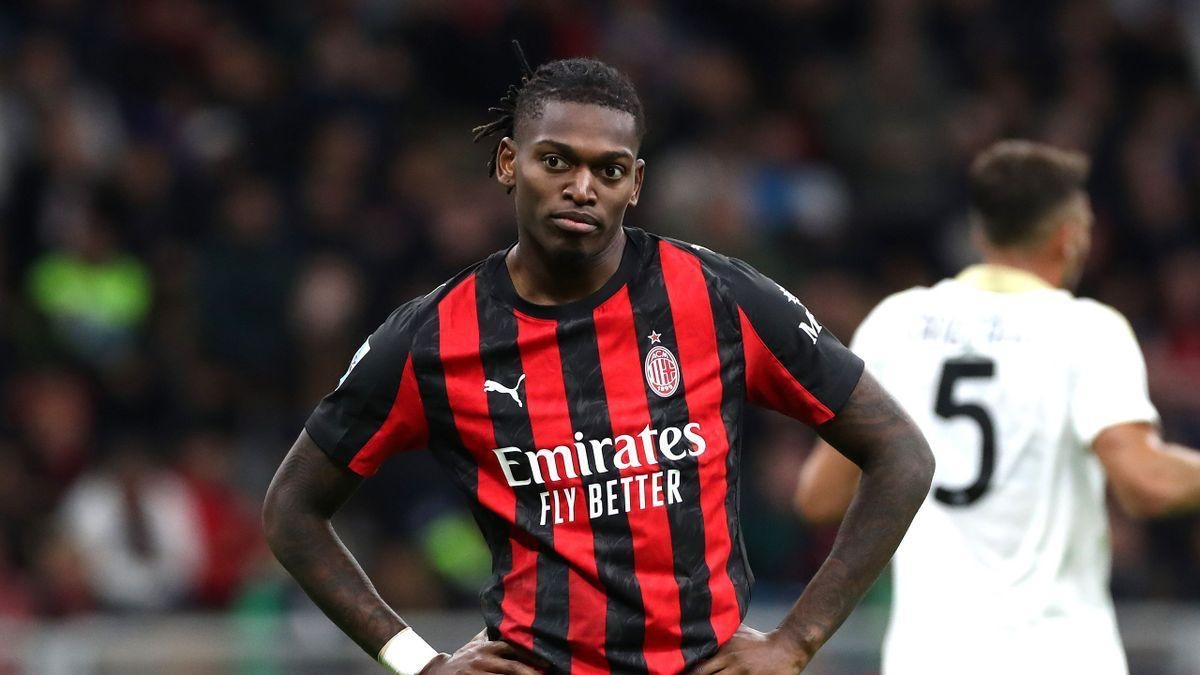
Football often draws a thin, invisible line between teams that simply play and teams that live every match as a chapter in a collective destiny. Over the past few weeks, Milan have moved exactly along that line, oscillating between performances worthy of a great side and missteps that are harder to justify. The last vivid image from the previous article was the tense, hard-fought 0-0 against Juventus, a match of resistance, of raised walls, a kind of prelude to the emotional tension that would carry the Rossoneri into the next cycle of games. And that was where everything began.
The win over Fiorentina, 2-1, felt like Milan stepping back onto the stage with elegance and ferocity, ready for another night under the brightest lights. It wasn’t just a victory; it was a statement. Fiorentina tried to impose their rhythm, but Milan responded with maturity and personality. It was one of those matches where supporters instantly understood whether their team was living in the moment or merely standing on the pitch. That day Milan were inside the game, as if every ball carried the weight of fate. The team looked solid, finally capable of managing difficult moments and striking when it mattered most. The win didn’t just give them three points, it left an atmosphere, a feeling.
Then came the 2-2 draw against Pisa, the kind of match that weighs heavily with supporters. It is against smaller teams that the hunger of a big club is measured, and that hunger simply wasn’t there. Too much complacency, too slow in overturning an inertia that should never have been lost. It is a paradox: against strong, structured sides Milan play like giants; against teams they should overwhelm with quality and intensity, they sometimes forget who they are. It’s a recurring mystery, a limit to be broken, and it makes life difficult for any coach trying to maintain emotional balance. Milan didn’t lack talent that day, they lacked ruthlessness. And in football, often, that alone makes the difference.
The response arrived in Bergamo, an intense 1-1 against Atalanta, a duel of nerves and legs. Facing the Dea means facing an opponent that tests not just technique but courage as well. In an atmosphere that boils like Bergamo, Milan showed they were alive, alert, capable of resisting and emerging in decisive moments. It wasn’t a win, but it was the performance of a team aware of its own value. In today’s football, a draw like this can feel almost like a victory, because it reveals who you are when the silence of the world breaks against the pressure of a difficult challenge.
Then came Roma, and that 1-0 victory tells the story of a team that knows how to suffer and still win. Milan played with bravery, without unnecessary embellishments, like a team fully aware that every ball carries the weight of a season. Roma tried to break through, but Milan responded with organisation, maturity, and distributed leadership. Winning these games is what allows a group to define itself as great. It wasn’t the goal alone that made the difference, it was the control, the calmness, the ability to hold the threads of the match without letting them slip.
And then, suddenly, the paradox returned: Parma. Another 2-2 result that left a bitter taste with the Rossoneri supporters. Parma are courageous, ambitious, with clear ideas, but this should still be a match a Milan with serious ambitions can govern without turmoil. Instead, the team looked lost between spaces, too open at the back, too soft up front. It is the picture of the limits still to be addressed: mental continuity, the approach, the ability to impose rhythm even when the match seems harmless. Because the most dangerous matches are often the ones that look simple.
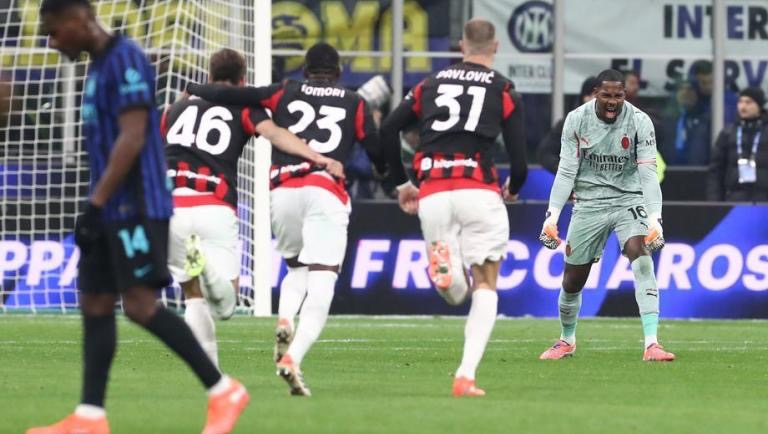
All of this, the swings, the sparks, the uncertainties, leads into the next chapter: Inter against Milan, 0-1. And here we enter territory beyond tactics, beyond football, beyond anything language alone can explain. This was not just a derby victory, it was a night shaped by the greatness of Mike Maignan. First, an astonishing save on Lautaro, a feline reflex that froze the stadium. Then an unreal stop on Thuram, one of those interventions that seem to bend time. And finally, the masterpiece: the penalty save on Çalhanoğlu, the perfect symbol of a night in which Maignan looked larger than the goal itself. Winning a derby is always an emotional earthquake, but winning like this amplifies everything. In the days leading up to the match, Milan feels like a tight rope; when Milan win, the city erupts. The explosion of noise after the final whistle still seems to echo between the tall buildings.
After the derby, the victory against Lazio, 1-0, felt like a natural continuation of that emotional inertia. And once again Maignan was decisive, this time with a miracle save on Gila’s point-blank header, another intervention that altered the direction of the match. The team then played with calm authority, controlling and protecting a victory far heavier than the numbers might suggest.
The Milan of recent weeks is an open novel, full of fiery chapters and dissonant pages. The victories against Fiorentina, Roma, Lazio, and above all Inter reveal a team capable of greatness; the draws against Pisa and Parma show that there is still work to be done. But if there is one truth that emerges from these matches, it is this: when Milan needs to be Milan, they become a team that pulses, suffers, leads, and wins. And above all, they ignite the entire city.
And within all this lies a crucial detail: Maignan’s contract expires in June 2026. Should he fail to renew, it would be an enormous loss, even for Massimiliano Allegri, whose tactical balance has often relied on the presence of a goalkeeper this dominant.
This is the story of a cycle that has made fans live through conflicting emotions, yet always intense. And that is what makes football extraordinary. And Milan, today, is a team that forces you to feel it, always, without ever letting you step aside.
