
WHEN RESULTS HOLD FIRM BUT PERFORMANCES RAISE QUESTIONS
By Giuseppe Forlano
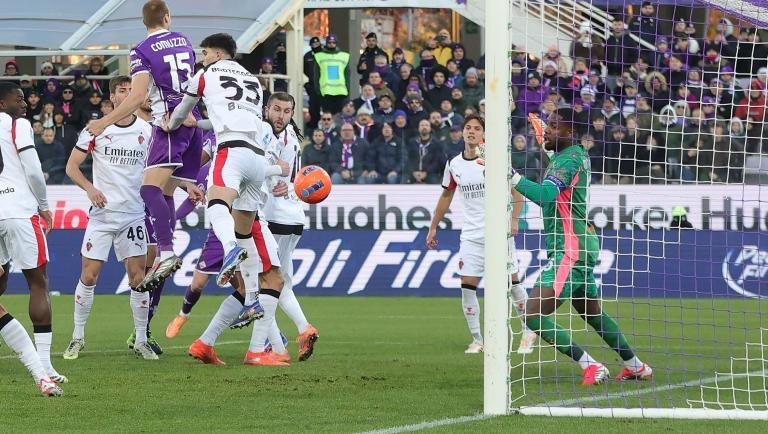
There is a Milan that continues to move forward with steady consistency, and another that still struggles to fully convince on the level of identity. This duality defines the current phase of Massimiliano Allegri’s team: a side that is resilient, mentally reliable and difficult to beat, yet often unable to assert itself through clear, dominant football. Observed closely, Milan appear more focused on control than command, more inclined to manage games than to impose themselves.
The recent run of matches reflects this tension with remarkable clarity. In Cagliari, Milan delivered an efficient, almost minimalist performance, settled by a moment of individual brilliance from Rafael Leão. It was a victory built on timing and risk management rather than sustained attacking pressure. This has become a hallmark of Allegri’s Milan: striking when the opportunity arises, while consistently prioritising defensive balance.
The same pattern, with less decisive outcomes, emerged against Genoa and Fiorentina. Both draws exposed the most evident limitations of Milan’s attacking structure. Possession was often sterile, ball circulation predictable, with too few players operating between the lines and a recurring difficulty in creating numerical superiority in the final third. Rather than dictating the tempo, Milan reacted to circumstances, chasing control instead of establishing it from the outset.
The trip to Como offered only a partial exception. The final score suggested a comfortable victory, yet the match itself told a more nuanced story. Milan endured phases of pressure, conceded initiative, and eventually prevailed thanks largely to superior individual quality. It was an important win, but not necessarily one that resolved doubts about tactical consistency.
Similar dynamics unfolded against Lecce and Roma. At San Siro, Milan controlled proceedings without ever truly closing the contest, leaving space for uncertainty until the final whistle. In Rome, the team showed emotional resilience and an ability to stay competitive, but again failed to seize control of the game. In both cases, Milan appeared more concerned with avoiding defeat than with asserting dominance.
The most revealing statistic is not the unbeaten run itself, but the attacking output behind it. Milan score little, often limiting themselves to a single goal per match, and rarely generate sustained pressure in waves. This is where the core of the criticism towards Allegri resides, not in his management of difficult moments, where he remains among the most reliable figures in Italian football, but in his inability to fully unlock the attacking potential at his disposal.
Leão remains the primary destabilising force, yet his influence fluctuates. Nkunku, Pulisic and the other attacking profiles operate within a system that does not always amplify their strengths. The prevailing impression is that Milan play with a slight handbrake on, consciously sacrificing part of their creative ceiling in the name of balance and structure.
And yet, the numbers continue to support Allegri. Milan are unbeaten in 21 league matches, a sequence that speaks of consistency, mental solidity and effective squad management. In a league as unforgiving as Serie A, this capacity to avoid collapse is a significant asset. Still, the question persists: is solidity alone enough to compete for the very top?
That question inevitably extends beyond the pitch. In recent days, Milan have completed a major shift in their ownership structure. RedBird Capital, led by Gerry Cardinale, has finalised the refinancing of the club, marking the definitive exit of Elliott Management from Milan’s ownership framework. The vendor loan that accompanied the 2022 acquisition has been repaid and replaced with a new financial structure, granting RedBird full strategic and operational control.
With this move, the Elliott era, defined by financial stabilisation and institutional recovery, comes to a formal close. A new phase begins, one in which Milan’s long-term vision rests entirely in Cardinale’s hands. Greater autonomy brings greater expectations, particularly on the sporting side. Stability is no longer the benchmark; progression is.
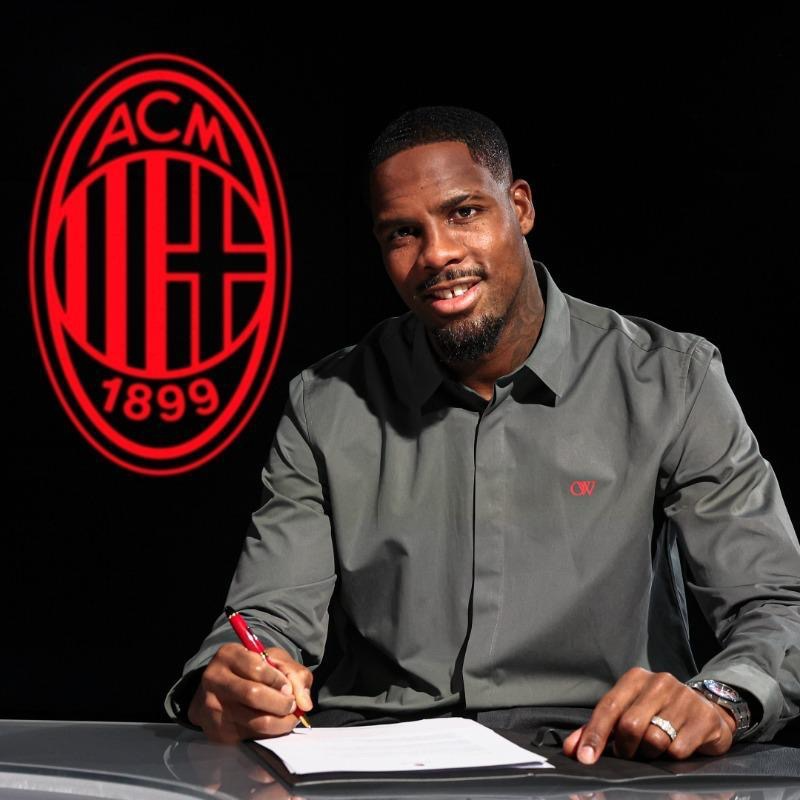
This broader context also frames Milan’s recent moves off the pitch. The pursuit of Jean-Philippe Mateta has come to an abrupt halt after the striker failed to pass a second round of medical examinations, ruling out his immediate arrival in Milanello. In parallel, the club has secured a far more decisive victory by extending Mike Maignan’s contract until 2031. Widely regarded as one of the three best goalkeepers in world football, Maignan is set to become a central pillar of Milan’s future, renewing his commitment amid a clear promise: to build a team capable of winning trophies.
Ultimately, Allegri’s Milan are a team that knows how to survive, but still must prove they can dominate. Results remain consistent, and continuity is a strength, yet as the Rossoneri proceed at a controlled pace, Inter continue to pull away at the top, stretching their lead to five points. First place is drifting further out of reach, and with it grows the urgency to transform solidity into genuine ambition. The challenge ahead is no longer about stability alone. It is, increasingly, about courage.
